
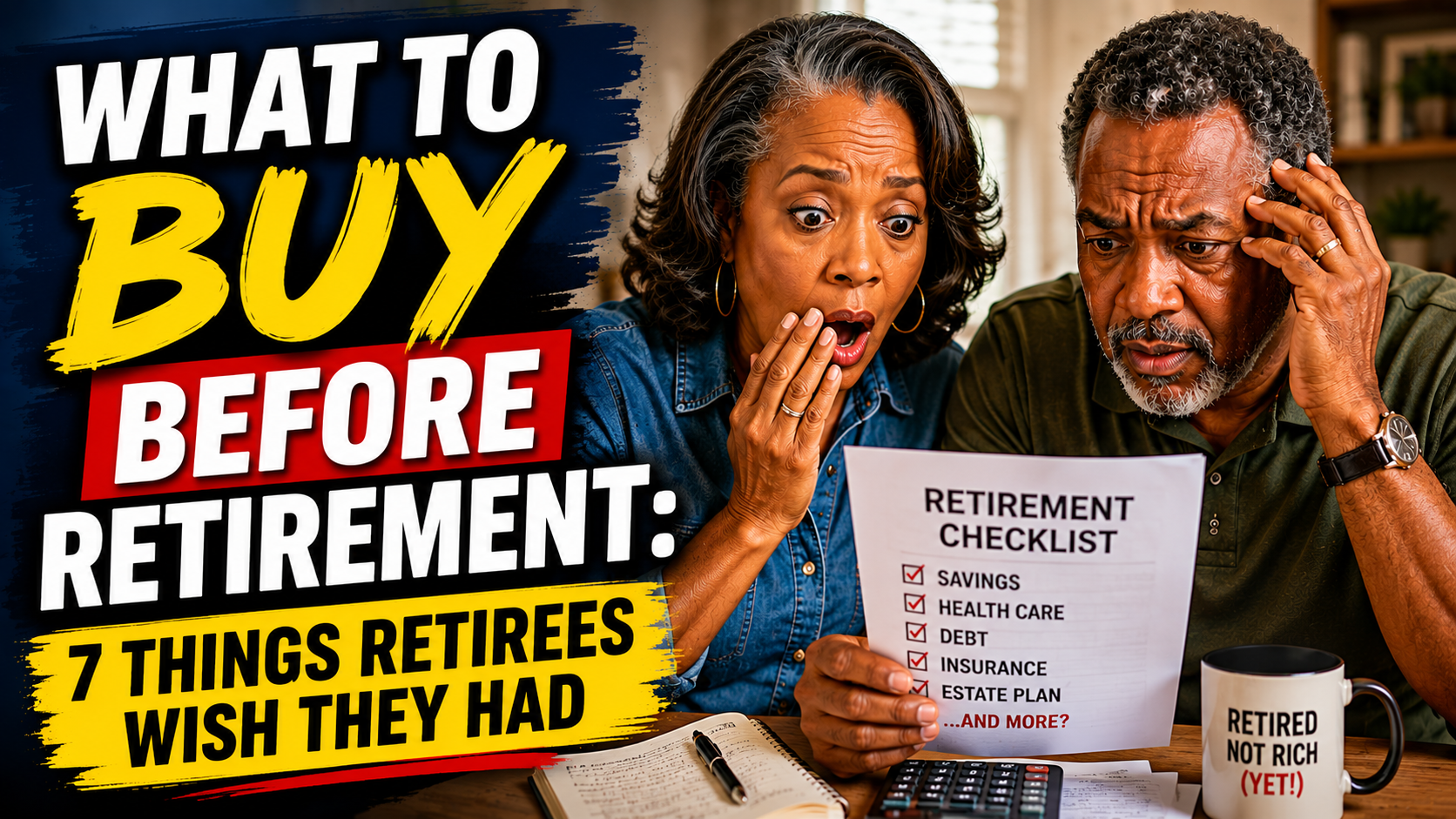
Retirement is supposed to be the chapter where you finally get to relax. No alarm clock screaming at you before sunrise, no boss scheduling a meeting that could have been an email, and hopefully no sitting in rush-hour traffic wondering why everybody decided to leave home at the exact same time.
But there’s another side of retirement that doesn’t get nearly as much attention: some financial decisions become much harder, more expensive, or simply different after you stop working.
That’s why one of the smartest questions to ask isn’t just, “How much money do I need to retire?” It’s also, “What should I take care of before I retire?”
It’s about preparing for the expenses, risks, and responsibilities that don’t magically retire just because you do.
Watch: What Retirees Wish They Bought Before They Retired
Why Planning Before Retirement Matters
Retirement changes the financial equation. While you’re working, you may have a regular paycheck, employer-sponsored benefits, access to group insurance, and years ahead of you to correct financial mistakes.
Once you retire, your income sources may change to Social Security, pensions, retirement accounts, investments, annuity income, part-time work, or some combination of these.
At the same time, many expenses don’t disappear. Housing, utilities, groceries, transportation, insurance, taxes, health care, home repairs, and family responsibilities can continue for decades.
You may stop working, but unfortunately your bills did not receive the retirement memo.
1. The Right Life Insurance Coverage
Life insurance is one of the financial tools worth reviewing before retirement rather than automatically assuming you won’t need it anymore.
The question isn’t simply whether you’re retired. The better question is whether someone could still experience a financial loss when you die.
For example, would your spouse lose part of the household income? Is there still a mortgage or other debt? Would your family need money for final expenses? Are you helping support children or grandchildren? Do you want to leave money behind for someone you love?
Those are financial needs that retirement doesn’t necessarily eliminate.
Before Retiring, Review:
- Your current life insurance coverage
- How long the coverage lasts
- Your beneficiaries
- Whether workplace coverage continues after retirement
- Outstanding debts
- Final expense needs
- Income your spouse could lose after your death
- Any legacy you want to leave behind
If you’re still deciding between different types of coverage, read Understanding the Types of Life Insurance in Plain English .
2. Coverage You Can Keep After Leaving Your Job
Employer benefits can make life wonderfully convenient while you’re working. The problem comes when someone assumes every benefit will follow them into retirement.
That isn’t always the case.
Group life insurance, disability benefits, and health coverage can change or end when employment ends. Some plans may offer continuation or conversion options, but the rules vary.
Find out exactly which benefits stay, which benefits disappear, which can be converted or continued, what deadlines apply, and what those benefits will cost after employment ends.
This is particularly important with life insurance. Waiting until after employer coverage disappears to investigate individual coverage could mean applying at an older age and possibly after health changes have occurred.
3. A Plan for Health Care Costs
Health care deserves its own place in retirement planning because Medicare doesn’t necessarily mean every medical expense suddenly becomes free.
Depending on your situation, retirement health costs may include premiums, deductibles, copays, coinsurance, prescription drugs, dental care, vision care, hearing services, and services that aren’t fully covered by your health plan.
If you’re retiring before becoming eligible for Medicare, there’s another question: How will you obtain health coverage during the gap?
Understand how you’re going to be covered and approximately what that coverage could cost before your final day at work.
For a refresher on health insurance terminology, visit Understanding Health Insurance Plans: A Beginner’s Guide .
4. A Long-Term Care Strategy
One of the biggest potential expenses later in life is extended care.
Long-term care can include help with everyday activities at home, assisted living, nursing-home care, adult day services, or other support. How these services are paid for depends on the person’s situation and coverage.
The important part is recognizing the risk before care is needed.
That doesn’t automatically mean everyone should purchase a long-term-care insurance policy. It means everyone approaching retirement should at least have a conversation about how extended care would be handled financially.
Ask Yourself:
If I needed help with daily activities for several years, where would the money come from?
Would my spouse become my caregiver?
Would my children have to step in financially?
What assets would be available?
What insurance or other planning options should I investigate before I need care?
5. An Emergency Fund That Survives Retirement
Emergency funds aren’t only for working people.
The air conditioner can still quit. The transmission can still decide it has completed its earthly assignment. The roof can still discover a brand-new place to leak precisely when you thought your monthly budget was looking cute.
Having accessible emergency savings can help prevent an unexpected expense from immediately forcing you to withdraw additional money from retirement investments, borrow money, or put a large expense on a credit card.
The appropriate amount varies by household, but the principle is simple: retirement should include a plan for expenses that weren’t invited to the budget meeting.
6. A Plan for Debt Before the Paychecks Stop
Not everybody needs to enter retirement completely debt-free, and different types of debt should be evaluated differently. But you should know exactly what you’re carrying into retirement.
Mortgage payments, car loans, credit cards, personal loans, and other obligations consume income regardless of whether that income comes from a paycheck or retirement assets.
Before retiring, calculate what your monthly obligations will look like after your employment income disappears.
Create your expected retirement income on one side of a page and your expected monthly expenses on the other. Don’t use the budget you hope you’ll have. Use the budget you’re realistically likely to have.
7. An Estate and Family Information Plan
This isn’t exactly something you “buy,” but it’s one of the most valuable things you can put in place before retirement.
Your spouse or family should know where important information is located.
Your Family Information Folder Might Include:
- Life insurance policy information
- Beneficiary information
- Bank and financial institution information
- Retirement account information
- Mortgage information
- Important contacts
- Estate documents
- Insurance agent contact information
- Attorney or financial professional contact information
- Instructions for locating important documents
The goal isn’t to put passwords or sensitive information somewhere unsafe. The goal is to make sure the people who would have to handle your affairs aren’t forced to become financial detectives during an already difficult time.
The Retirement Purchase People Forget: Protection
Retirement advertising usually shows beaches, golf courses, RVs, cruises, and smiling couples drinking something tropical while staring at an ocean.
Nobody’s retirement commercial shows somebody sitting at the kitchen table reviewing insurance policies.
But protecting the money you’ve accumulated can be just as important as accumulating it.
You’ve spent decades earning money, paying bills, raising families, and hopefully building assets. Retirement planning should include thinking about what could threaten those assets and how those risks will be handled.
Do You Still Need Life Insurance After Retirement?
Maybe. Maybe not.
Retirement itself doesn’t answer the question.
Someone with substantial assets, no dependents, no debt, adequate final-expense resources, and no particular legacy goal may have a very different life insurance need from someone whose spouse depends heavily on pension income, who still carries a mortgage, supports family members, or wants guaranteed money available for beneficiaries.
That’s why life insurance should be reviewed as part of the overall retirement picture instead of automatically canceled simply because you’ve reached retirement age.
If you’re wondering how different policies compare, read Term vs. Whole Life Insurance: Which Is Right for You? .
Should You Buy Life Insurance Right Before Retirement?
That depends on whether you actually have a life insurance need.
Buying a policy just because you’re approaching retirement doesn’t automatically make sense. But if you’ve identified a financial need for coverage, waiting can have consequences.
Life insurance pricing and eligibility can depend on factors including age, health, tobacco use, coverage amount, policy type, and underwriting. Products and issue ages also vary by insurer.
That’s why evaluating the need earlier gives you more information and potentially more options than waiting until a crisis forces the conversation.
What Retirees Should Review Before Their Last Day of Work
| Area | Question to Ask |
|---|---|
| Income | Where will my monthly income come from? |
| Expenses | What will my realistic retirement budget be? |
| Life Insurance | Would anyone suffer financially if I died? |
| Employer Benefits | Which benefits end when I leave? |
| Health Insurance | How will I pay for health care? |
| Long-Term Care | How would extended care be funded? |
| Debt | Which monthly obligations will follow me into retirement? |
| Emergency Savings | How will I handle a large unexpected expense? |
| Beneficiaries | Are my beneficiary designations current? |
| Estate Planning | Would my family know what to do if something happened to me? |
Don’t Wait Until the Retirement Party
Some retirement decisions can be changed later. Others become more complicated once you’ve left your employer, experienced a health change, started drawing benefits, or begun spending retirement assets.
That’s why retirement preparation should start while you still have choices.
Frequently Asked Questions
What should I buy before I retire?
There isn’t one universal shopping list. Before retiring, consider reviewing your life insurance, health coverage, long-term-care strategy, emergency savings, debt obligations, estate documents, retirement income sources, and other protections. What you actually need to purchase depends on your finances, health, family, existing coverage, and retirement goals.
Do I need life insurance before I retire?
You may need life insurance if your death could still create a financial hardship for someone else. Consider income your spouse could lose, debts, final expenses, dependents, existing assets, and legacy goals when determining whether coverage is appropriate.
Should I keep life insurance after retirement?
It depends on why you own the coverage. Some retirees no longer need as much life insurance because children are independent, debts are lower, and assets have increased. Others maintain coverage for a surviving spouse, final expenses, debts, dependents, business needs, or legacy planning.
What happens to employer life insurance when I retire?
Employer-provided life insurance may end, decrease, or offer continuation or conversion options when employment ends. The exact provisions depend on the employer’s plan and insurance contract. Review your benefits before retiring and pay close attention to deadlines.
Is Medicare enough for all retirement health expenses?
Medicare can provide important health coverage, but retirees can still face premiums and other out-of-pocket expenses, and not every service is covered in full. Understanding your expected health coverage and costs should be part of retirement planning.
When should I start preparing financially for retirement?
Ideally, retirement preparation begins years before you stop working. Earlier planning gives you more time to save, reduce debt, review insurance, understand employer benefits, estimate future expenses, and make adjustments before employment income ends.
What is one of the biggest retirement planning mistakes?
One major mistake is focusing only on how much money you’ve accumulated while overlooking the expenses and financial risks you’ll face after retirement. A retirement plan should consider both income and spending as well as insurance, health care, debt, emergencies, and family responsibilities.
Can I buy life insurance after I retire?
Potentially, yes. Availability depends on factors such as age, health, state, insurer, policy type, coverage amount, and underwriting requirements. Because options and costs can change with age and health, someone who expects to need coverage may benefit from reviewing available options before retirement.
Continue Learning Before Retirement
Not sure how life insurance works?
What Is Life Insurance and How Does It Work?
Compare your coverage options:
Understanding the Types of Life Insurance in Plain English
Term or whole life?
Term vs. Whole Life Insurance: Which Is Right for You?
Before purchasing coverage:
Read This Before You Buy Life Insurance
Avoid costly insurance mistakes:
Insurance Traps for People Over 40 Explained
Retiring Soon? Review Your Life Insurance Before You Clock Out for Good.
Retirement can change your income, employer benefits, debts, and financial responsibilities. Your life insurance should be reviewed along with everything else.
If you’re approaching retirement and aren’t sure whether your current coverage still makes sense, let’s look at your situation.
GET MY PERSONALIZED QUOTE
Call: 803-935-5990
Email: contactus@just4myfamily.com
Life happens. Be prepared. Stay protected. Always put your family first.
Final Thoughts
The best time to discover a gap in your retirement plan is while you still have time to do something about it.
Before leaving the workforce, look beyond your retirement account balance. Review your income, expenses, health coverage, insurance, debts, emergency savings, beneficiaries, estate documents, and the financial impact your death or a major health event could have on your spouse or family.
You may discover that you’re already well prepared. You may discover that a few things need attention. Either result is better than finding out five years into retirement that something important was overlooked.
Plan for the years that come after it. That’s the part retirement is really about.
This article is for general educational purposes only and is not individualized legal, tax, investment, Medicare, financial, or insurance advice. Insurance products, premiums, underwriting, eligibility, issue ages, benefits, exclusions, continuation and conversion provisions, and availability vary by insurer, employer plan, state, age, health, and individual circumstances. Medicare, Social Security, retirement account, and tax rules can also change. Review official plan documents and policy contracts and consult appropriately qualified professionals when making decisions for your individual circumstances.