

Whole life insurance can sound confusing at first—especially when you hear people talking about premiums, cash value, death benefits, dividends, policy loans, and guaranteed values.
One of the biggest questions people have is: What actually happens to the money I pay into a whole life insurance policy?
Unlike traditional term life insurance, whole life insurance is designed to provide permanent coverage and build cash value over time. That is one of the reasons the premiums are generally higher than term life insurance premiums.
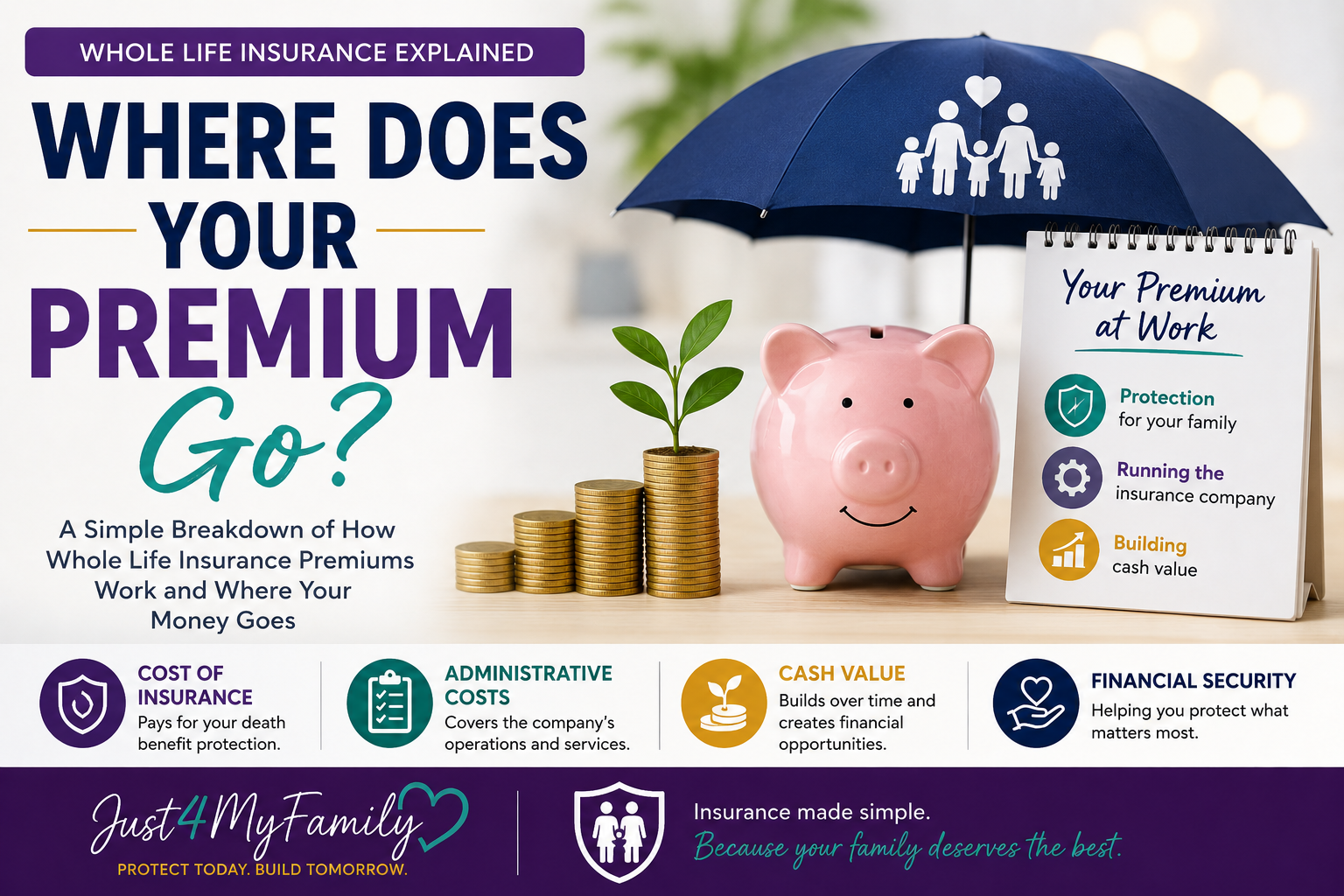
Whole life insurance premiums help support the insurance company’s obligation to provide the policy’s death benefit, the costs of maintaining the policy, and the policy’s guaranteed cash-value structure. With traditional whole life insurance, premiums are generally paid according to a predetermined schedule.

Watch: How Do Whole Life Insurance Premiums Work?
Prefer to watch instead of read? This video explains how whole life insurance premiums, permanent coverage, and cash value work together.
What Is Whole Life Insurance?
Whole life insurance is a type of permanent life insurance. It is generally designed to provide coverage throughout the insured person’s lifetime as long as the policy remains in force according to its terms.
Whole life insurance also includes a cash-value component that can accumulate over time.
If you’re still learning the basics, start with our guide to what life insurance is and how it works .
What Does a Whole Life Premium Support?
Your premium supports an insurance contract with several moving parts. It isn’t simply deposited into a personal savings account.
Whole life insurance should not be viewed as though the insurer simply places part of every premium into a savings account in your name. The policy is an insurance contract with scheduled benefits, cash values, expenses, and guarantees.
Do Whole Life Insurance Premiums Stay the Same?
Traditional ordinary level-premium whole life insurance is generally structured so that scheduled premiums remain level during the required premium-paying period.
That can be different from certain term life insurance policies, where premiums may increase if coverage is renewed after the original level term period ends.
However, whole life insurance can be structured in several different ways, so you should always verify the actual premium schedule in your policy.
Different Ways Whole Life Premiums Can Be Structured
Ordinary Whole Life
Premiums are generally paid according to the policy’s scheduled premium arrangement over a long period.
Limited-Pay Whole Life
Premiums are paid over a shorter period, while the insurance is intended to continue beyond the premium-paying period according to the contract.
Single-Premium Whole Life
The policy is funded using one lump-sum premium rather than ongoing scheduled premium payments.

Why Does Whole Life Insurance Usually Cost More Than Term Life?
Term life insurance generally provides coverage for a specified period and typically does not build cash value.
Whole life insurance is designed to provide permanent protection and accumulate cash value.
Because whole life provides different guarantees and policy features, its premiums are generally higher than the initial premiums for comparable term life insurance coverage.
For a deeper explanation of the differences, read Understanding the Types of Life Insurance in Plain English .
| Feature | Term Life | Whole Life |
|---|---|---|
| Coverage | Specified period | Designed for permanent coverage |
| Initial Premium | Generally lower | Generally higher |
| Cash Value | Typically none | Yes |
| Typical Use | Temporary financial protection | Long-term or permanent protection |
How Does Whole Life Cash Value Grow?
Cash value generally builds gradually as the policy remains in force.
In the early years, the cash surrender value may be significantly less than the premiums you’ve paid.
Over time, the policy’s guaranteed cash value can increase according to the schedule shown in the contract.
This is why whole life insurance is generally better evaluated as a long-term product rather than something you expect to purchase and surrender a short time later.
Guaranteed vs. Non-Guaranteed Values
When reviewing a whole life illustration, pay close attention to which values are guaranteed and which values are non-guaranteed.
Guaranteed values are based on the guarantees in the insurance contract.
Other illustrated values may depend on assumptions that can change.
“Which numbers on this illustration are guaranteed?”
Can You Borrow Against Whole Life Insurance?
Depending on the policy and available cash value, the policy owner may be able to borrow against the policy.
But a policy loan isn’t the same thing as withdrawing money from an ordinary savings account.
Interest can accrue on a policy loan, and outstanding loans and interest can reduce the amount ultimately available to beneficiaries.
Before borrowing from a policy, ask the insurer how the loan affects:
- Cash value
- Death benefit
- Interest charges
- Policy performance
- The risk of the policy lapsing
Do Whole Life Policies Pay Dividends?
Some whole life policies are called participating policies.
Participating policies may pay dividends based on the insurer’s experience and the provisions of the policy.
Depending on the contract, dividends may potentially be:
- Received in cash
- Applied toward premiums
- Left with the insurer according to available options
- Used to purchase additional insurance
Unless specifically guaranteed by the contract, dividends should not be treated as guaranteed.

What Determines Your Whole Life Insurance Premium?
The premium you’re offered can depend on several factors, including:
- Your age when coverage is issued
- Your health and medical history
- Tobacco or nicotine use
- The amount of insurance coverage
- The policy design
- The premium-payment schedule
- Underwriting considerations
- Optional riders or additional benefits
Actual premiums and eligibility vary by insurer and individual circumstances.
Can You Afford the Whole Life Premium Long Term?
This may be one of the most important questions to answer before purchasing whole life insurance.
Don’t only ask: “Can I afford this payment today?”
Ask: “Does this premium fit comfortably into my long-term financial plan?”
Permanent insurance is generally intended to address a long-term need. Purchasing coverage that becomes difficult to maintain later can work against the reason you bought the policy in the first place.
Parents trying to determine how much protection they may need can also read: How Much Life Insurance Coverage Does a Parent Need?

Questions to Ask Before Buying Whole Life Insurance
- Is the premium guaranteed?
- How long am I expected to pay premiums?
- What is the guaranteed death benefit?
- What is the guaranteed cash value each year?
- Which illustrated values are not guaranteed?
- Is this a participating policy?
- Are dividends guaranteed?
- How do policy loans work?
- What happens if I surrender the policy?
- Are there surrender charges?
- Can I comfortably maintain this premium over the long term?
Are Whole Life Insurance Death Benefits Taxable?
Under current federal tax rules, life insurance proceeds received by a beneficiary because of the insured person’s death are generally not included in the beneficiary’s gross income.
However, exceptions can apply, and interest received on life insurance proceeds may be taxable.
For current federal information, review the IRS guidance on life insurance proceeds .
Want an Independent Life Insurance Resource?
The National Association of Insurance Commissioners’ life insurance consumer guide provides additional information about whole life, cash value, premiums, policy loans, and questions consumers should ask before purchasing coverage.
Frequently Asked Questions
Does all of my whole life premium go into cash value?
No. Whole life insurance is an insurance contract, not a savings account. Premiums support the policy’s insurance obligations, expenses, and cash-value guarantees according to the contract.
Do whole life insurance premiums increase with age?
Traditional ordinary level-premium whole life is generally designed with scheduled level premiums. Other whole-life premium structures exist, however, so verify the guarantees in your specific contract.
Why does whole life insurance cost more than term insurance?
Whole life generally provides permanent protection and builds cash value, while traditional term insurance provides protection for a specified period and typically does not accumulate cash value.
Can I stop paying premiums once my whole life policy has cash value?
Do not assume that accumulated cash value automatically eliminates your premium obligation. Your options depend on the policy and its provisions. Contact the insurer before changing or stopping premium payments.
What happens if I cancel a whole life policy?
If the policy has accumulated cash surrender value, you may be entitled to the applicable surrender value. Surrender charges, outstanding loans, tax considerations, and other policy provisions can affect what you receive.
Continue Learning About Life Insurance
Not Sure Which Life Insurance Option Fits Your Family?
Your budget, family responsibilities, coverage needs, and long-term goals can all affect which type of life insurance may be appropriate for you.
GET MY FREE LIFE INSURANCE QUOTEExplore your options and learn what coverage may fit your needs and budget.





Leave a Reply