
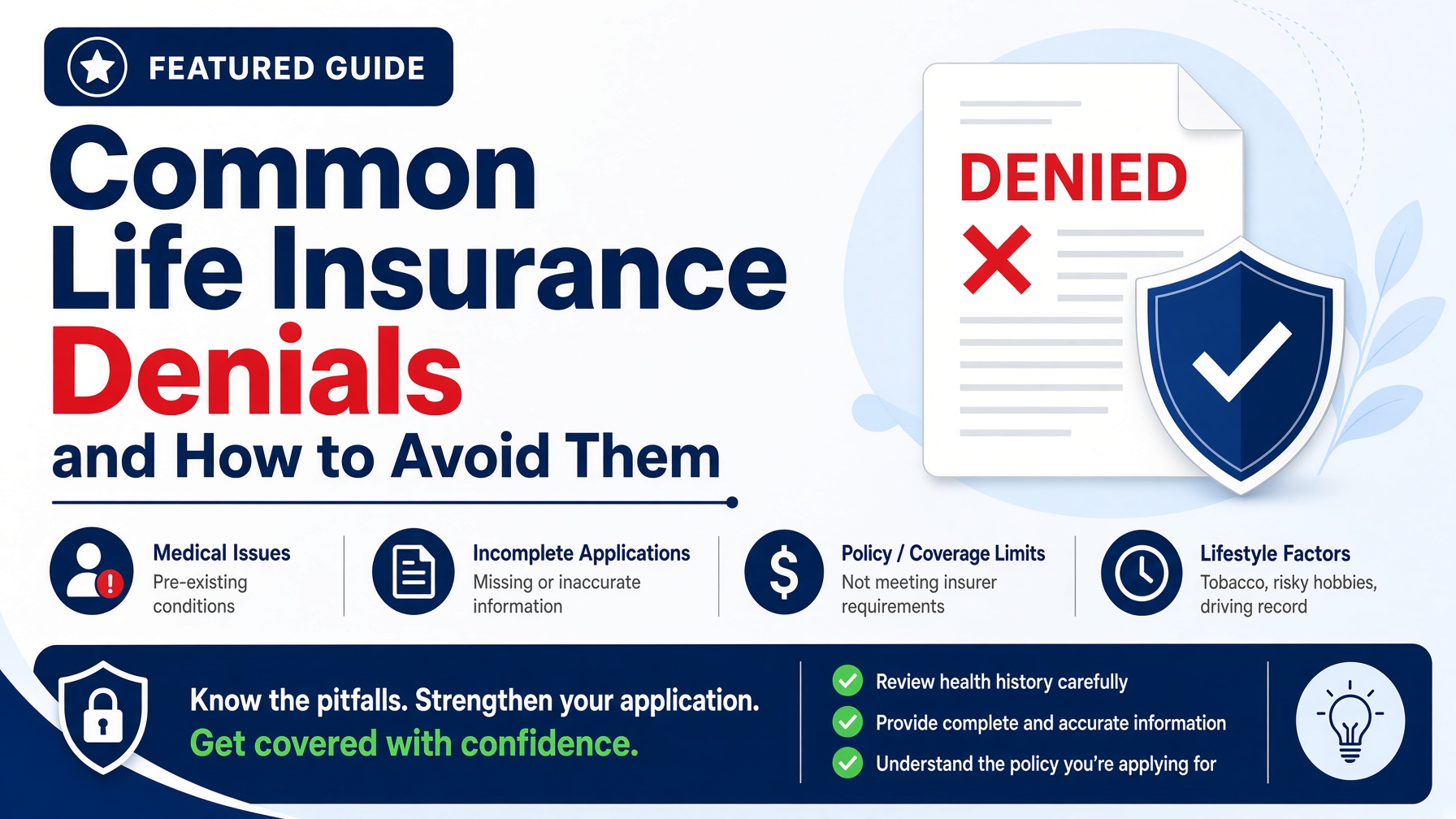
Imagine applying for life insurance because you want to protect your family, only to receive a letter saying your application has been denied.
Now you’re sitting there wondering, “What did I do wrong?”
Here’s something many people don’t realize: not every life insurance denial means you’re permanently uninsurable.
Sometimes an application is declined because of medical underwriting. Other times, the problem involves missing information, a driving record, or applying for a policy that isn’t a good fit.
Although not every denial can be prevented, understanding the process can help you avoid unnecessary mistakes.
Watch: Common Life Insurance Denials and How to Avoid Them

Different insurance companies use different underwriting guidelines. Knowing why an application was declined can help you decide what to do next.
1 Incomplete or Inaccurate Application Information
Let’s start with something that can cause serious problems: not providing accurate information on your application.
Maybe someone forgets to list a prescription medication, leaves out a previous diagnosis, or doesn’t answer a question about tobacco use correctly.
Sometimes these mistakes are accidental. Other times, applicants leave information out because they’re worried about being denied.
But insurance companies may use medical records, prescription histories, and other information to evaluate an application.
If important information is missing or inaccurate, the company may request clarification, decline coverage, or take other action.
Material misrepresentations can also create problems with an existing policy or future death-benefit claim, subject to applicable law.
Why Honesty Matters
Having a medical condition doesn’t automatically mean you cannot qualify for life insurance. But withholding information can create unnecessary risks for you and your beneficiaries.
How to avoid it: Answer application questions truthfully and completely. Review your answers before submitting and ask for clarification if something is confusing.
2 Medical Conditions That Don’t Meet the Insurer’s Guidelines
One of the most common concerns people have about life insurance is whether their health will affect their eligibility.
Conditions such as diabetes, heart disease, certain cancers, and other significant medical issues may influence underwriting.
But here’s what you should know: having a medical condition does not automatically mean every insurer will decline you.
Companies may evaluate factors such as:
- Your specific diagnosis
- When you were diagnosed
- Current treatments and medications
- How well the condition is managed
- Recent medical results
- Other health and lifestyle factors
Different insurers may evaluate the same medical history differently.

How to avoid unnecessary denials: Discuss your medical history with a knowledgeable licensed insurance agent before applying. Ask which insurers and policy types may be appropriate for your situation.
3 A Risky Driving Record or High-Risk Activities
Now, you might be thinking, “What does my driving record have to do with life insurance?”
More than you might expect.
Insurance companies may consider serious traffic violations, multiple DUIs, or a history of reckless driving when evaluating risk.
Certain occupations and hobbies may also affect underwriting.
For example, activities involving aviation, technical climbing, or other significant hazards may require additional questions or special underwriting.
That doesn’t mean everyone who participates in these activities will be denied.
It means the insurer may want more information before deciding whether to offer coverage and at what price.
How to avoid unnecessary denials: Be upfront about your driving record, occupation, and hobbies. Ask whether your history affects eligibility and whether another insurer might evaluate your situation differently.
4 Missing Medical Exams or Required Documents
Imagine filling out an application, answering all the questions, and then ignoring the insurance company’s requests for additional information.
That can delay the process or cause an application to be closed without coverage being issued.
Depending on the policy, the insurer might request:
- A medical examination
- Medical records
- Clarification about your health history
- Additional financial information
- Verification of application details
Not every life insurance policy requires a medical exam. But if your chosen policy does, completing it may be necessary for the insurer to make a decision.
How to avoid it: Respond promptly to requests, keep your contact information updated, and complete any required examinations or paperwork.
5 Applying for a Policy That Isn’t a Good Match
Here’s another reason people can run into trouble.
Not every life insurance policy has the same eligibility requirements.
A company offering one type of policy may have stricter underwriting than another insurer or product.
For example, some traditional policies involve detailed medical underwriting, while certain simplified-issue products use fewer health questions.
Guaranteed-issue life insurance may not require medical underwriting, but these policies often have smaller coverage amounts, higher costs relative to coverage, and graded death benefits or waiting periods for certain deaths.
That means the easiest policy to qualify for isn’t automatically the best policy to buy.
Traditional Underwriting
May involve detailed health questions, records, and medical testing.
Simplified Issue
Often uses a shorter health questionnaire, with eligibility still subject to underwriting.
Guaranteed Issue
Generally has no medical underwriting, but coverage amounts and benefits may be limited.
Employer Group Coverage
May offer coverage with different eligibility rules, but benefits can depend on employment and plan terms.
How to avoid unnecessary denials: Compare policy types and eligibility requirements before submitting an application. Consider both the coverage you need and the premium you can realistically afford.
What Should You Do If You’ve Already Been Denied?
First, don’t assume that one denial means you can never obtain life insurance.
Instead, use the decision as an opportunity to understand what happened.
Step 1: Ask Why You Were Declined
Contact the insurance company or agent and ask for an explanation of the underwriting decision.
If the decision involved information from a consumer report, you may have rights under federal law to obtain details about the report and dispute inaccuracies.
Step 2: Check for Incorrect Information
If your application or records contain errors, find out how to request a correction.
An incorrect medication record, inaccurate personal information, or misunderstanding about your medical history could affect an insurer’s evaluation.
Step 3: Review Other Insurance Options
Another insurer may use different underwriting guidelines.
You may also want to explore a different policy type, depending on your health, age, coverage goals, and budget.
Step 4: Understand the Costs and Limitations
Before accepting an alternative policy, review its premium, death benefit, exclusions, waiting periods, and other important terms.
Step 5: Keep Existing Coverage in Place
If you already have life insurance, don’t cancel it while exploring new options.
Wait until any intended replacement coverage has been approved, is active, and has been carefully reviewed.

How to Prepare Before Applying for Life Insurance
Before submitting your next application, use this checklist:
- Review your current health conditions and medications.
- Be ready to answer medical history questions accurately.
- Understand your driving and lifestyle history.
- Determine how much coverage your family needs.
- Compare policy types and underwriting requirements.
- Ask whether medical exams or additional documents are required.
- Review premiums, exclusions, and policy limitations.
- Work with a properly licensed insurance professional if you need guidance.
Frequently Asked Questions
Can I get life insurance after being denied?
Possibly. One company’s denial doesn’t necessarily mean every insurer will decline you. Eligibility depends on your circumstances and the underwriting rules of the company and product.
Will high blood pressure automatically disqualify me?
No. Insurers may consider factors such as blood pressure readings, treatment, complications, and overall health. Decisions vary by insurer.
Can I get life insurance without a medical exam?
Some policies do not require a medical exam. However, they may still involve health questions, prescription-history checks, or other underwriting.
Does being denied by one company affect future applications?
It may. Future applications may ask about previous declines, and insurers may use information from permitted underwriting sources. Answer questions about prior applications honestly.
What if my medical records contain a mistake?
Contact the appropriate healthcare provider or reporting organization to ask about correction procedures. If a consumer report was involved, you may also have rights to dispute inaccurate information.
The Bottom Line: A Denial Doesn’t Always Mean the End
Life insurance companies evaluate risk differently, and not every applicant will qualify for every policy.
But understanding why applications are declined can help you avoid preventable mistakes and make more informed decisions.
Be truthful on your application. Understand your policy options. Respond to underwriting requests. And if you’ve already been declined, find out why before assuming you have no other choices.
Because the goal isn’t simply to get approved.
The goal is to find life insurance that fits your circumstances and provides meaningful financial protection for your loved ones.
Looking for Life Insurance Options?
At Just 4 My Family, we help individuals and families explore life insurance options based on their needs and budgets.
Whether you’re applying for the first time or exploring alternatives after a denial, understanding your choices is an important first step.
Explore Life Insurance OptionsAnd remember: life happens. Be prepared, stay protected, and always put your family first.
Disclaimer: This article provides general educational information and does not guarantee life insurance approval, eligibility, premiums, or benefits. Underwriting guidelines, policy provisions, and consumer rights vary by insurer, product, and state. Review actual policy documents and consult qualified professionals when appropriate.