

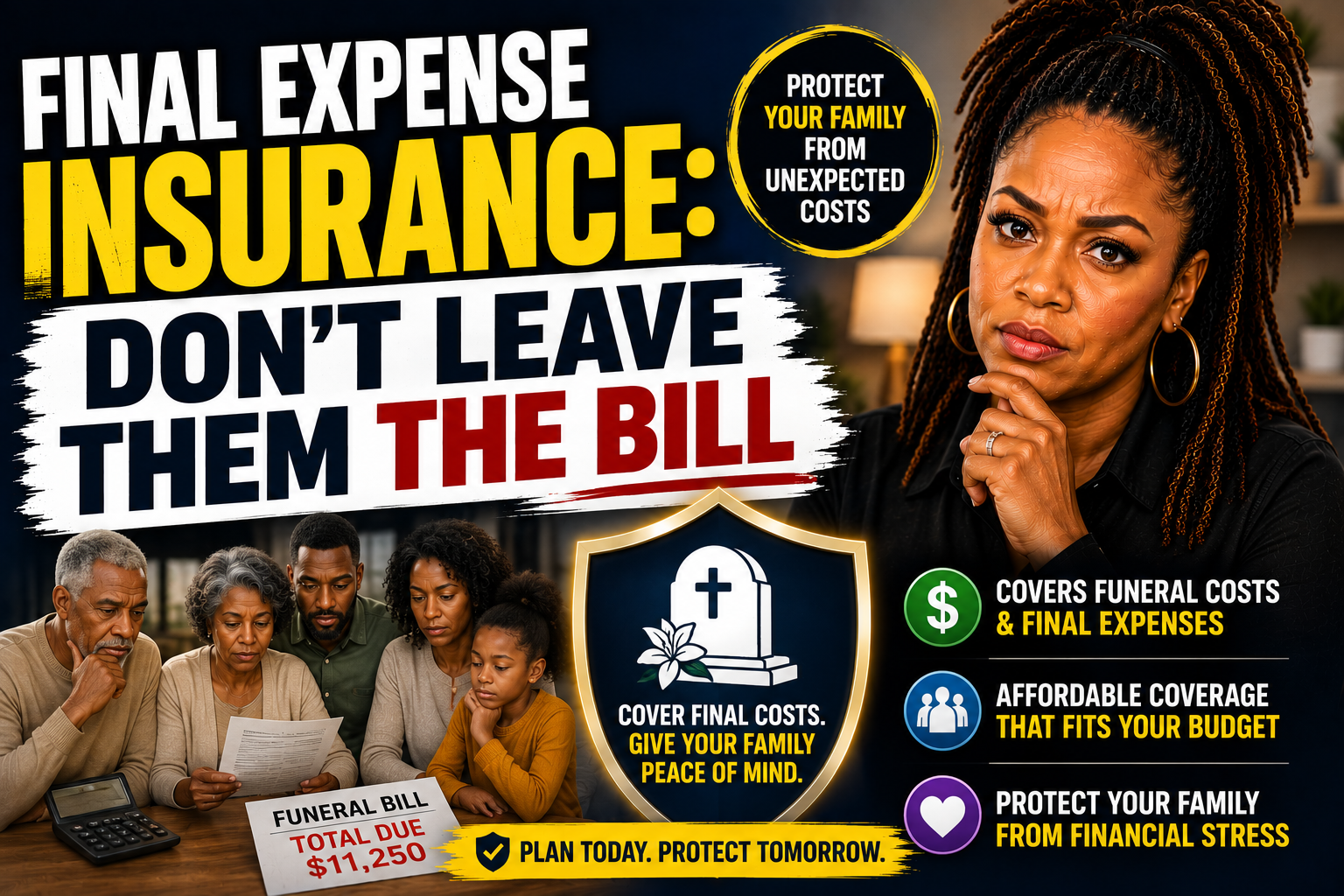
Nobody likes talking about funerals.
We would much rather talk about birthdays, vacations, retirement plans, grandbabies, and everything else we hope to enjoy in life.
But there’s one financial question every family should eventually consider:
If something happened to you, where would the money come from to pay your final expenses?
Funeral and burial expenses can arrive at one of the most emotionally difficult times a family will ever experience.
Final expense insurance is one option designed to help families prepare for those costs ahead of time.
But what exactly is final expense insurance? How does it work? Who might need it? And how is it different from other types of life insurance?
Let’s break it down in plain English.
Watch: What Is Final Expense Insurance and Why Do You Need It?
Watch the video below for a simple explanation, then keep reading for a deeper look at how final expense coverage works.
What Is Final Expense Insurance?
Final expense insurance is generally a smaller permanent life insurance policy designed to provide a death benefit that can help beneficiaries handle expenses after the insured person dies.
You may also hear it called:
- Burial insurance
- Funeral insurance
- Final expense life insurance
These terms are often used to describe similar types of coverage.
The policy isn’t necessarily limited to paying a funeral home directly. In a traditional life insurance arrangement, the death benefit is generally paid to the named beneficiary, subject to the policy’s terms.
The beneficiary can then use those funds according to their needs.
Final Expense Insurance in Plain English
You’re setting aside life insurance protection so that when you die, your family has money available to help handle the expenses you leave behind instead of having to figure out where that money is going to come from during an already difficult time.
What Can Final Expense Insurance Help Pay For?
Despite the name, the death benefit isn’t necessarily limited to funeral expenses.
Depending on the family’s situation, beneficiaries might use life insurance proceeds to help with:
- Funeral services
- Burial expenses
- Cremation expenses
- A casket or urn
- Memorial services
- Transportation expenses
- Outstanding household bills
- Medical expenses
- Credit obligations
- Other financial needs after a death
The important distinction is that life insurance generally provides a death benefit. It isn’t a prepaid funeral contract where every funeral expense has already been selected and purchased.
Why Would Someone Need Final Expense Insurance?
Some families have enough savings and other resources to comfortably handle final expenses.
Others don’t.
And that’s the real question.
Would paying your final expenses create a financial burden for the people you love?
If the answer is yes, final expense coverage may be worth considering.
1. It Can Help Keep Your Family From Scrambling for Money
Think about what happens immediately after someone dies.
The family is grieving, making phone calls, notifying relatives, handling paperwork, making arrangements, and trying to process what just happened.
That is not the ideal time to start asking:
“Okay… who’s got the money?”
Without a financial plan, families may have to rely on savings, credit cards, loans, contributions from relatives, or fundraising.
Having life insurance doesn’t remove the emotional loss.
But it may help remove some of the financial pressure that comes with it.
2. You May Not Need a Huge Life Insurance Policy
Final expense coverage can make sense for someone whose insurance needs have changed over time.
Consider someone whose children are grown, mortgage is paid off or nearly paid off, and major income-replacement needs are no longer what they were 20 or 30 years ago.
That person might not be looking for hundreds of thousands of dollars of coverage.
Their primary concern may simply be:
- Funeral and burial expenses
- Small outstanding debts
- Medical bills
- Leaving some financial breathing room for family
That’s a different insurance need than a 35-year-old parent with three children and a large mortgage.
3. Final Expense Insurance Is Typically Permanent Coverage
Many final expense policies are forms of whole life insurance.
That means they’re generally designed to remain in force for the insured’s lifetime as long as required premiums are paid and the policy remains in force according to its terms.
This differs from term life insurance, which generally provides coverage for a specified period.
If you’d like a simple explanation of the major policy types, read:
Understanding the Types of Life Insurance in Plain English
4. Some Final Expense Policies Have Simplified Underwriting
Final expense policies are often marketed toward older adults, and some products use simplified underwriting.
That may mean answering health questions rather than completing the more extensive underwriting sometimes associated with larger traditional life insurance policies.
But don’t confuse “simplified” with “everybody automatically qualifies.”
Eligibility still depends on the insurance company, product, applicant’s age, health information, state, and underwriting requirements.
Some policies may provide full benefits immediately, while certain products may have graded or modified benefits during an initial period for death from some causes. Policy provisions vary. Always understand the death-benefit provisions, exclusions, limitations, premiums and waiting periods—if any—before purchasing coverage.
What About Guaranteed-Issue Final Expense Insurance?
You may see advertisements saying things like:
“No medical exam!”
“No health questions!”
“Guaranteed acceptance!”
Guaranteed-issue policies can be useful in certain circumstances, particularly when health conditions make other coverage difficult to obtain.
But don’t automatically assume guaranteed issue should be your first choice simply because it sounds easier.
These policies can have different pricing and death-benefit provisions compared with other coverage.
If you’re able to qualify for another type of policy, it’s worth comparing your available options.
How Much Does Final Expense Insurance Cost?
There isn’t one universal price.
Premiums can depend on factors such as:
- Age
- Sex
- Health and underwriting classification
- Tobacco or nicotine use
- Coverage amount
- Insurance company
- Policy type
- State of residence
That’s why an advertisement saying coverage “starts at” a certain price doesn’t tell you what your actual premium will be.
Your premium depends on the policy and your individual circumstances.
What Age Should You Consider Final Expense Insurance?
There isn’t one perfect age.
Final expense insurance is commonly associated with older adults, but the right time to consider coverage depends on your situation.
Instead of focusing only on age, ask:
- Do I already have enough life insurance?
- Do I have savings specifically available for final expenses?
- Would my family struggle financially if I died?
- Do I have debts or other obligations?
- Will my existing life insurance remain in force for the rest of my life?
- Could my health make obtaining coverage more difficult later?
Final Expense Insurance vs. Term Life Insurance
These policies usually serve different purposes.
| Feature | Final Expense | Term Life |
|---|---|---|
| Typical Purpose | Final expenses and smaller financial needs | Larger temporary protection needs |
| Coverage Period | Typically permanent if policy requirements are met | Specified term |
| Coverage Amounts | Generally smaller | Often available in larger amounts |
| Underwriting | May be simplified depending on product | Varies significantly by insurer and product |
Neither option is automatically “better.”
The question is which type of coverage appropriately addresses the financial need you’re trying to protect.
Who Might Consider Final Expense Insurance?
Final expense coverage may be worth exploring if:
- You don’t currently have life insurance.
- Your existing coverage may end before you die.
- You primarily want coverage for funeral and other final expenses.
- You don’t want your family using savings to pay those expenses.
- You have a relatively small remaining insurance need.
- You want permanent coverage and can comfortably maintain the premium.
Who Might Need Something Different?
Final expense insurance isn’t necessarily enough for someone who needs substantial income replacement.
For example, if you’re raising young children, carrying a large mortgage, or supporting a spouse who depends heavily on your income, a small final expense policy may not address your family’s full financial exposure.
You may need to consider a larger life insurance strategy.
Parents should also read:
How Much Life Insurance Coverage Does a Parent Need?
Before Buying, Check the Coverage You Already Have
Don’t buy another policy until you know what you already own.
Check:
- Individual life insurance policies
- Employer-provided life insurance
- Older policies you’ve maintained for years
- Other financial resources intended for final expenses
Then determine whether there’s actually a gap.
Before You Buy Final Expense Insurance
Ask these questions first:
- How much coverage am I buying?
- Is the coverage permanent?
- Is my premium guaranteed?
- When does the full death benefit become available?
- Is there a graded or modified benefit?
- What exclusions or limitations apply?
- Who is my beneficiary?
- Can I comfortably afford this premium long term?
- What happens if I stop paying?
- Do I already have other coverage?
If you don’t understand the policy, keep asking questions before you buy it.
Common Final Expense Insurance Mistakes
Mistake #1: Buying Too Little Coverage
Think about more than one expense. Consider the total financial burden your family could face.
Mistake #2: Buying More Premium Than You Can Afford
Permanent coverage may need to be maintained for many years. Make sure the premium fits your budget.
Mistake #3: Assuming Every Policy Works the Same
They don’t. Policy provisions and underwriting can vary by insurer and product.
Mistake #4: Not Understanding a Waiting Period
If a policy has graded or modified benefits, understand exactly how those provisions work.
Mistake #5: Forgetting to Review Your Beneficiary
Make sure your beneficiary designation continues to reflect your wishes.
Frequently Asked Questions About Final Expense Insurance
Is final expense insurance the same as life insurance?
Final expense insurance is a type of life insurance generally designed around smaller death benefits and final-expense needs.
Can the beneficiary use the money for something besides a funeral?
With a traditional life insurance policy, the death benefit is generally paid to the named beneficiary according to the policy terms rather than being restricted solely to a funeral bill.
Do you need a medical exam for final expense insurance?
It depends on the product. Some final expense policies use simplified underwriting and may not require a traditional medical exam, while underwriting requirements vary by insurer and policy.
Does final expense insurance have a waiting period?
Some policies may provide immediate full coverage for covered causes of death, while certain graded or modified products may limit benefits during an initial period. Always review the actual policy provisions.
Is final expense insurance only for seniors?
It’s commonly marketed toward older adults, but eligibility and appropriate use depend on the insurer, product and individual’s circumstances.
How much final expense insurance should I buy?
Consider the expenses you want the death benefit to help address, existing savings, other life insurance, outstanding obligations and what your family could reasonably need.
Learn More About Protecting Your Family
The Bottom Line
Final expense insurance isn’t really about funerals.
It’s about the people who will still be here after you’re gone.
Someone will have to make the arrangements.
Someone will have to handle the bills.
And somebody will have to decide where the money comes from.
Planning ahead gives you an opportunity to answer that question now instead of leaving your family to answer it later.
You can’t remove the grief.
But you can help reduce the financial burden.
Want to Explore Final Expense Coverage?
If you’re thinking about final expense insurance, you can explore available life insurance options and determine what may fit your needs and budget.
EXPLORE LIFE INSURANCE OPTIONSCoverage availability, eligibility, benefits, underwriting and premiums vary by applicant, policy and insurance carrier.
And remember: life happens.
Be prepared, stay protected, and always put your family first.





Leave a Reply